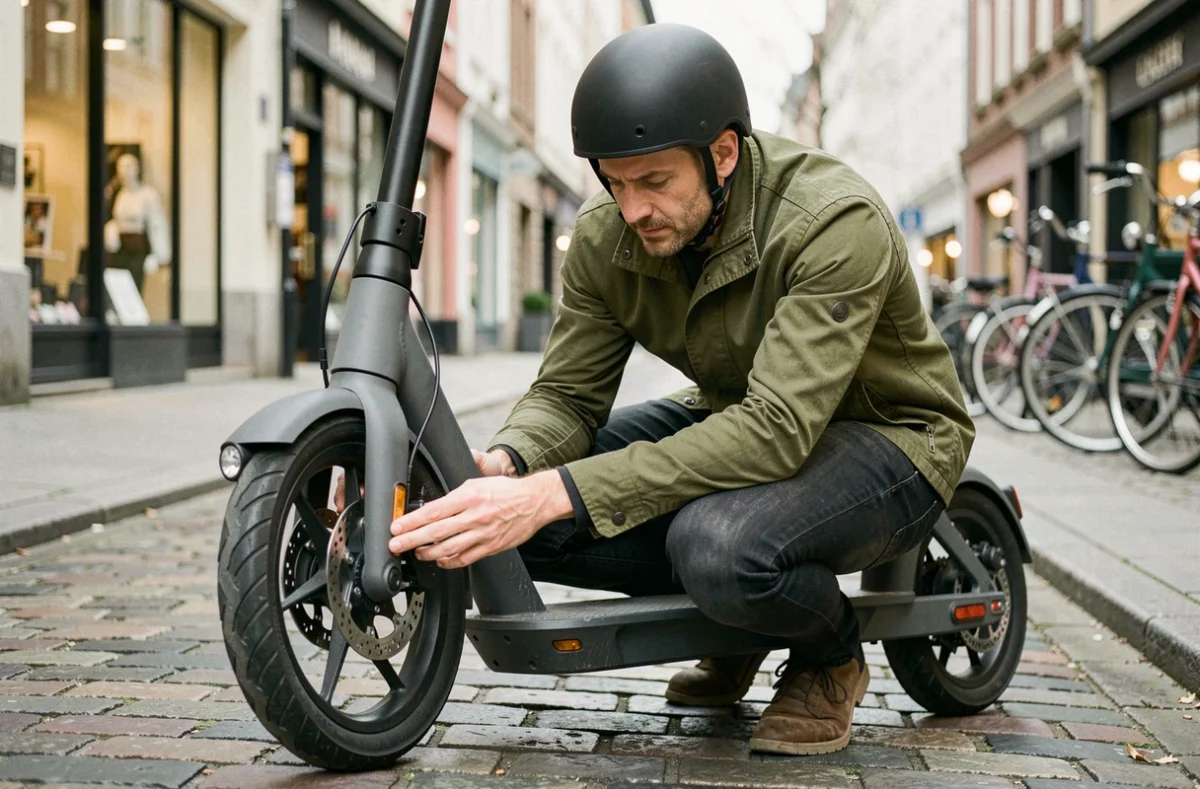
Choosing between a scooter and an electric bike is primarily a question of distance. A three-kilometer route in the city center does not require the same vehicle as a daily commute of fifteen kilometers between the suburbs and the office. Before comparing models, it is essential to establish this framework: distance, elevation, parking possibilities, and usual weather conditions.
Lithium-ion battery: what really determines its lifespan
The battery represents the most significant expense on an electric bike or scooter. Its replacement often costs as much as an entry-level vehicle. Understanding how it works can help avoid costly mistakes.
A lithium-ion battery ages in two ways. The first is related to charge cycles: each full charge consumes one cycle. The second, less known, depends on storage temperature. Leaving a fully charged battery in an unheated garage during winter accelerates its chemical degradation, even if not used.
Noticing that your range decreases after a few months? The usual reflex is to recharge more often, while keeping the charge between 20% and 80% significantly extends its lifespan. This range limits the electrochemical stress on the cells. Plugging the battery in to 100% every night is counterproductive.
If you compare technical specifications, note the capacity in watt-hours (Wh) rather than ampere-hours (Ah). Wh incorporates voltage and provides a real measure of available energy, comparable from one model to another. Specialized guides on 1001roues.net detail these technical characteristics for each category of vehicle.
Helmet and mandatory equipment: regulations vary by department
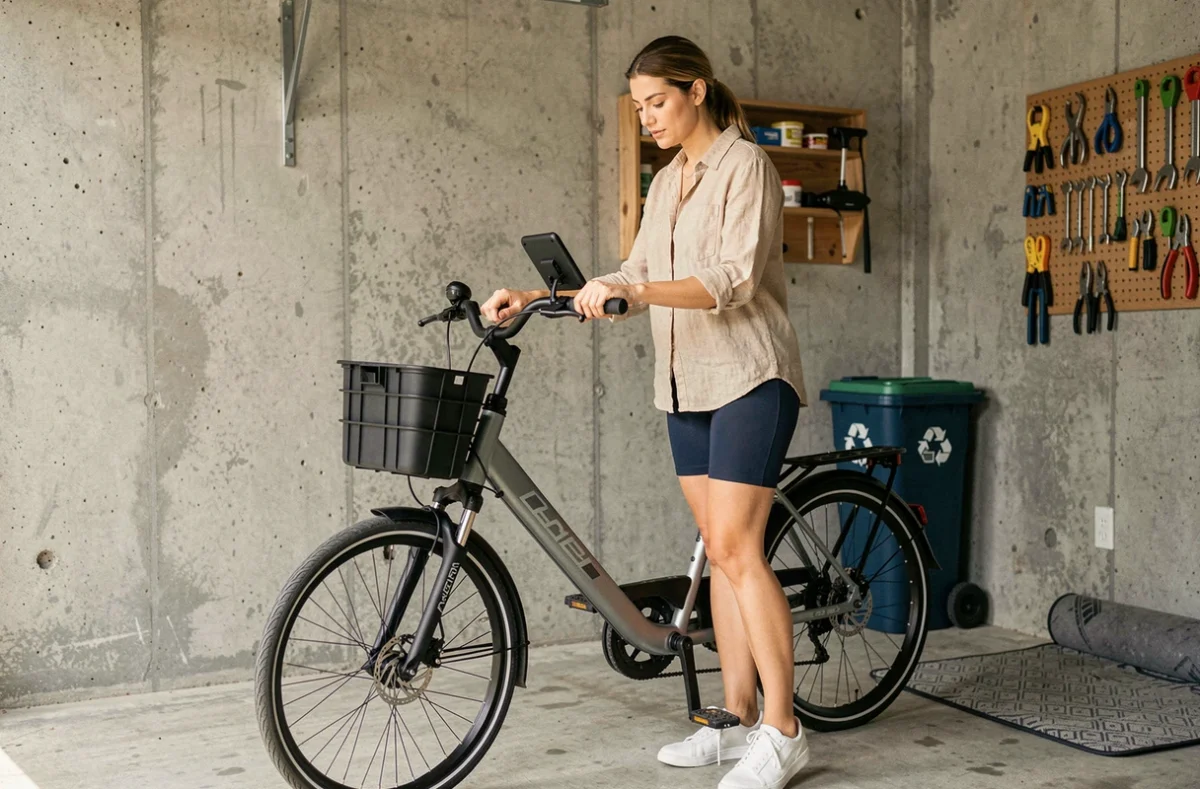
Most guides simply remind users of national regulations: speed limited to 25 km/h, prohibition of riding on sidewalks (unless authorized by the municipality at 6 km/h), and the obligation to have lights and a reflective vest at night. For electric bikes, the same traffic rules as for traditional bicycles apply.
This national framework is no longer sufficient. Since 2026, several prefectural orders require helmets and reflective vests for scooters in specific territories, with fines varying from one department to another.
- In Paris, Hauts-de-Seine, Seine-Saint-Denis, and Val-de-Marne, helmets and reflective equipment have been mandatory since August 7, 2026, under penalty of a fixed fine of 135 euros.
- In Loire-Atlantique, helmets and reflective vests are required, with a fine of 35 euros for non-compliance.
- In Yvelines, an order effective from September 15, 2026, stipulates a fine of 150 euros for each missing piece of equipment.
- Nord and Pas-de-Calais have adopted similar measures for all EDPM users, regardless of age.
Check the regulations in your department before purchasing, as the cost of an approved helmet is negligible compared to these fines. This territorial disparity only concerns scooters and other EDPMs, not traditional electric bikes.
Regular maintenance: tires, brakes, and transmission
An electric bike shares most of its components with a traditional bike. The chain (or belt), brake pads, and tires wear out in the same way, just faster due to the additional weight of the motor and battery.
Tires and inflation pressure
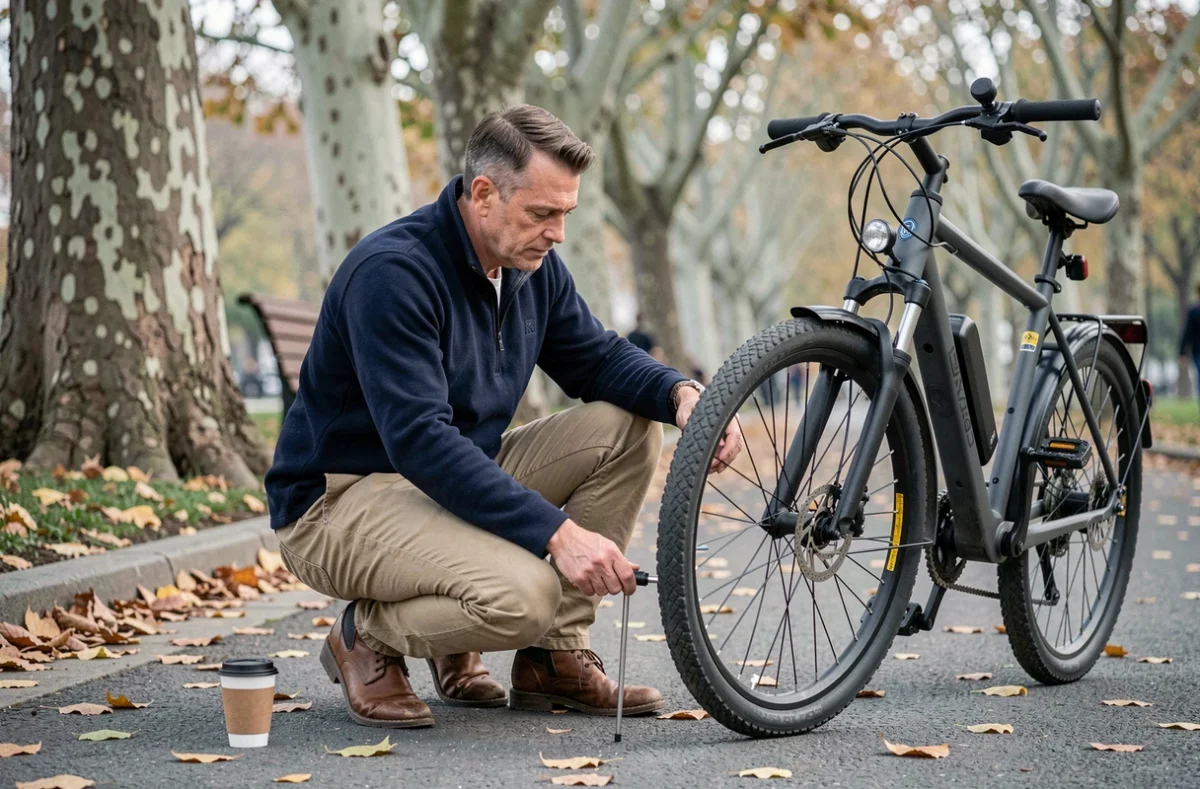
Under-inflated tires increase rolling resistance. The motor compensates, the battery drains faster, and sidewall wear accelerates. Checking the pressure every two weeks is the most cost-effective maintenance action.
On a scooter, the choice between solid tires and inflatable tires makes a difference. Solid tires eliminate the risk of punctures but transmit more vibrations. Inflatable tires offer better comfort and grip, at the cost of regular maintenance.
Brakes and safety
Hydraulic disc brakes equip most mid-range electric bikes. They require little maintenance but need brake fluid to be bled about once a year. On scooters, mechanical drum or disc brakes dominate. Testing the braking distance on wet ground after each pad change allows you to calibrate the actual power.
Criteria for choosing between a scooter and an electric bike based on the journey
Why does this choice deserve consideration beyond price? Because daily use determines long-term satisfaction much more than the technical specifications.
The electric bike is suitable for regular distances of over five kilometers, routes with elevation, and mixed paths (road and bike lane). Pedal assistance allows you to arrive without sweating, a decisive factor for commuting. The range, generally greater than that of a scooter, also allows for leisure outings on weekends.
The electric scooter excels in very short distances in dense urban areas. Its compactness when folded simplifies combining it with public transport. A multimodal journey (metro then last mile) remains the ideal playground for the scooter.
The purchase price also influences the decision. For equivalent performance, an electric bike is significantly more expensive than a scooter. The gap narrows if you factor in the cost of battery replacement, which is more frequent on entry-level scooters whose cells support fewer cycles.
Civil liability insurance is mandatory for an electric scooter (classified as EDPM). This additional annual cost should be considered from the time of purchase.
Whichever vehicle you choose, the most cost-effective investment remains regular maintenance: battery stored within the correct charge range, tires checked, brakes inspected. A well-maintained model also retains a better resale value, a concrete argument when it comes time to upgrade to the next model.