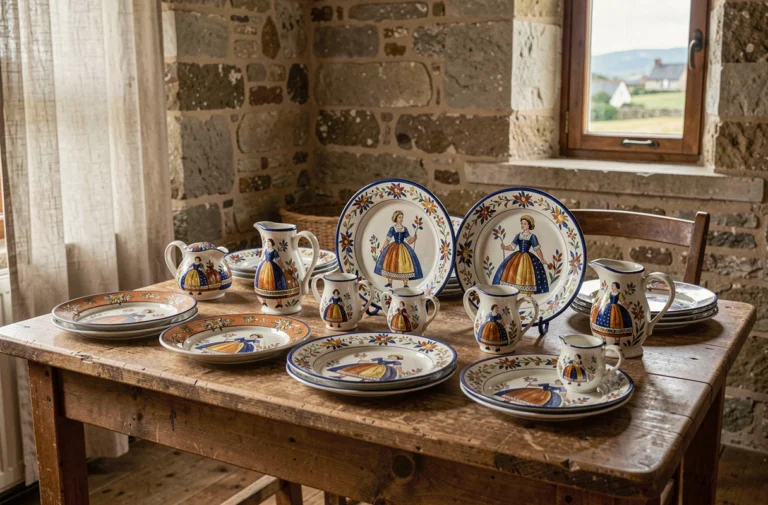
Craftsperson, creator, worker, master craftsperson, entrepreneur: these terms describe distinct professional realities, but they are often used interchangeably in ads, quotes, and profiles. Choosing the right word is about more than style. Some terms refer to official qualifications governed by the French Crafts Code, while others are purely descriptive. Understanding the differences helps avoid misrepresenting a business—or, worse, implying a qualification the professional does not hold.
Comparison table of synonyms for craftsperson by status and usage
Before replacing the word craftsperson in a text, first check what each term implies from both a regulatory and a perceptual standpoint. The table below groups the main synonyms according to three criteria: the nature of the term (protected designation, official title, or everyday word), the context in which it works best, and the risk of ambiguity it creates.
| Term | Nature | Suitable context | Risk of ambiguity |
|---|---|---|---|
| Craftsperson | Designation governed by the French Crafts Code | Quotes, invoices, commercial communications | Low if the business is registered in the trades register |
| Master craftsperson | Official title awarded by the chamber of trades | Legal notices, professional signage | High if used without holding the title |
| Artisan craftsperson | Designation linked to a list of craft trades defined by ministerial order | Trade fairs, exhibitions, product descriptions | High: implies practicing one of the listed trades |
| Creator | Everyday word with no legal framework | Design, fashion, brand communications | Low, but may downplay technical expertise |
| Worker | Everyday word for a manual laborer | Historical, industrial, or literary contexts | Medium: suggests employment rather than self-employment |
| Entrepreneur | Everyday word with a business-management connotation | Business press, LinkedIn profiles | Medium: obscures the manual aspect of the trade |
| Contract manufacturer | Technical term (textiles, subcontracting) | Subcontracting agreements, industry | Low in its field, but unclear elsewhere |
As explained in an article by Le Petit Gratuit, the range of words related to craftsperson extends beyond these seven terms, but they cover the vast majority of cases encountered in professional writing.

Protected designations and unrestricted synonyms: where the legal line falls
The most consequential distinction is between terms governed by legislation (the French Crafts Code and ministerial orders) and words from everyday vocabulary. Craftsperson, master craftsperson, and artisan craftsperson are not simple interchangeable synonyms: each comes with specific requirements.
Under the French Crafts Code, the word craftsperson refers to an individual or the head of a business registered in the trades register. The activity must primarily involve manual production, processing, or repair. Using this term on a quote when the business is not registered in that register may lead to an accusation of misleading commercial practices.
The title of master craftsperson requires a master craftsman certificate or experience validated by the chamber of trades and crafts. Using it on a business card without holding it amounts to claiming an official qualification that does not exist.
The designation artisan craftsperson, meanwhile, is based on practicing a trade included in the official list of craft trades (established by ministerial order). A cabinetmaker or stained-glass artist registered in the trades register may legitimately use it. A freelance graphic designer who makes screen-printed posters, on the other hand, does not fall into this category, even if their work is manual and creative.
The risks of poorly worded advertising
The danger does not always stem from fraudulent intent. A writer who uses “master craftsperson” to praise a skilled professional without checking whether they hold the title misleads readers. The risk concerns the qualification readers may assume, not the actual quality of the work.
In a quote or advertisement, the prudent approach is to reserve protected terms for professionals who hold the relevant qualifications and use unrestricted wording for everyone else.
Common synonyms for craftsperson: choosing the right term for the register and trade
Terms without a legal framework offer more flexibility, but each shapes the reader’s perception in a different way.
- Creator emphasizes design and originality. It suits trades where design takes priority (contemporary jewelry, designer furniture), but it downplays the technical side of making. A carpenter who calls themselves a creator may blur their positioning.
- Worker has historically referred to paid manual labor. It works perfectly in a literary text or an article about the history of trades. On a commercial website, it suggests subordination, which does not fit the status of a self-employed professional.
- Entrepreneur highlights management and economic risk-taking. It resonates with bankers and investors, much less with customers looking for local expertise. Calling a potter an “entrepreneur” shifts the focus from the material to the business plan.
- Contract manufacturer is used in the textile and industrial sectors to describe someone who manufactures products to order according to an external specification. Outside this context, the term remains opaque.
The choice of synonym therefore depends on the target audience and the channel. An online professional profile, a trade fair catalog, and a product description each call for a different register.

Craftsperson or artist: a semantic distinction that has shifted over the centuries
Until the 18th century, craftsperson and artist were largely synonymous. Both words share the Latin root ars (art, technique, skill). The distinction grew as the fine arts claimed an intellectual status separate from manual labor.
Today, artist implies personal expression, while craftsperson implies meeting a practical need. A ceramicist who exhibits in a gallery may call themselves an artist. The same ceramicist, when making tableware to order, works as a craftsperson. The two roles often coexist in the same person.
This distinction, which is more cultural than legal, directly affects how a text is written. In a text for a craft fair, describing a professional as an artist highlights the creative aspect. In a professional directory, the word craftsperson grounds the description in the practical realities of the trade.
There is no single universally correct term. It depends on what the text is meant to achieve: confirm a regulated qualification, highlight a creative approach, or simply describe manual work carried out independently. Checking the professional’s actual status before choosing a term remains the most reliable precaution.