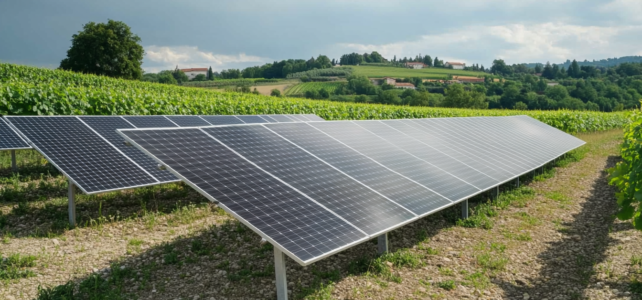
The quest for clean and renewable energy has become a major issue of our time. In the face of the climate crisis and the depletion of fossil resources, solar energy stands out as a promising solution. It is accessible, renewable, and its environmental impact is reduced compared to other energy sources. Solar panels play a central role in this energy transition, transforming sunlight into usable electricity for homes, businesses, and even entire communities. This device, whose principle is simple yet ingenious, has become a symbol of sustainability and innovation. The rise of photovoltaic technologies, combined with a significant decrease in production costs, has made this energy source more accessible than ever, paving the way for massive adoption across the globe.
The advantages of solar panels
Solar panels offer numerous benefits that appeal to both individuals and industries. These advantages extend beyond mere energy production.
- Energy independence: Installing solar panels reduces dependence on traditional electrical grids, providing the ability to produce one’s own electricity.
- Reduction of carbon footprint: By producing energy from the sun, an abundant and infinite resource, greenhouse gas emissions are significantly decreased.
- Financial savings: In the long term, electricity bills decrease significantly, allowing for a return on the initial investment.
- Property value enhancement: Installing solar panels can increase the value of a property, given the growing demand for eco-friendly housing.
How solar panels work
Understanding how solar panels work may seem complex, but it is based on fundamental physical concepts. This process begins with the absorption of photons by photovoltaic cells.
Photovoltaic cells are primarily made of silicon, a semiconductor that generates a flow of electrons when exposed to light. This generation of electrons creates a direct current. This current is then converted into alternating current by an inverter, making the electricity compatible with common electrical devices.
The choice of materials and the arrangement of the cells significantly influence the efficiency of the panels. Recent technological advancements have optimized these parameters to maximize energy production even under suboptimal sunlight conditions.
The challenges of solar energy
Despite its many advantages, solar energy must overcome certain obstacles to establish itself as a viable large-scale solution.
- Energy storage: The main challenge lies in the ability to store the energy produced for later use. Current batteries, although increasingly efficient, still represent a significant cost.
- Environmental impact of manufacturing: The production of solar panels requires the use of resources and processes that are not always environmentally friendly.
- Recycling of panels: At the end of their useful life, panels must be effectively recycled to avoid generating new waste.
- Regulations and incentives: Government policies play a key role in the adoption of solar technologies, and their implementation can vary significantly from one country to another.
The future of solar energy
Innovation and technological research are at the heart of the evolution of the solar sector. These efforts open new perspectives for the development of renewable energies.
Innovative concepts such as flexible solar panels or those integrated into architectural structures promise to expand installation possibilities. These innovations, coupled with the rise of energy storage solutions like lithium-ion batteries, suggest a future where solar energy could meet an increasing share of global energy needs.
Collaboration between the public and private sectors is essential to overcome current obstacles. Joint initiatives can accelerate the adoption of solar technologies while ensuring a favorable regulatory framework and appropriate economic incentives.
Solar panels not only provide an ecological and sustainable energy solution, but they also symbolize humanity’s ability to adapt and innovate in the face of pressing environmental challenges. By embracing this technology, we take an important step towards a cleaner and more responsible future.