On a logistics platform site or in a freshly poured garage, quartz concrete attracts with its smooth surface and abrasion resistance. The material lives up to its mechanical promises, but several constraints arise once the floor is in service. Before validating this coating for a residential or commercial project, it is beneficial to identify its concrete limits, those that are not always listed on product sheets.
Shrinkage Cracks on Quartz Concrete: Quartz Does Not Protect the Slab
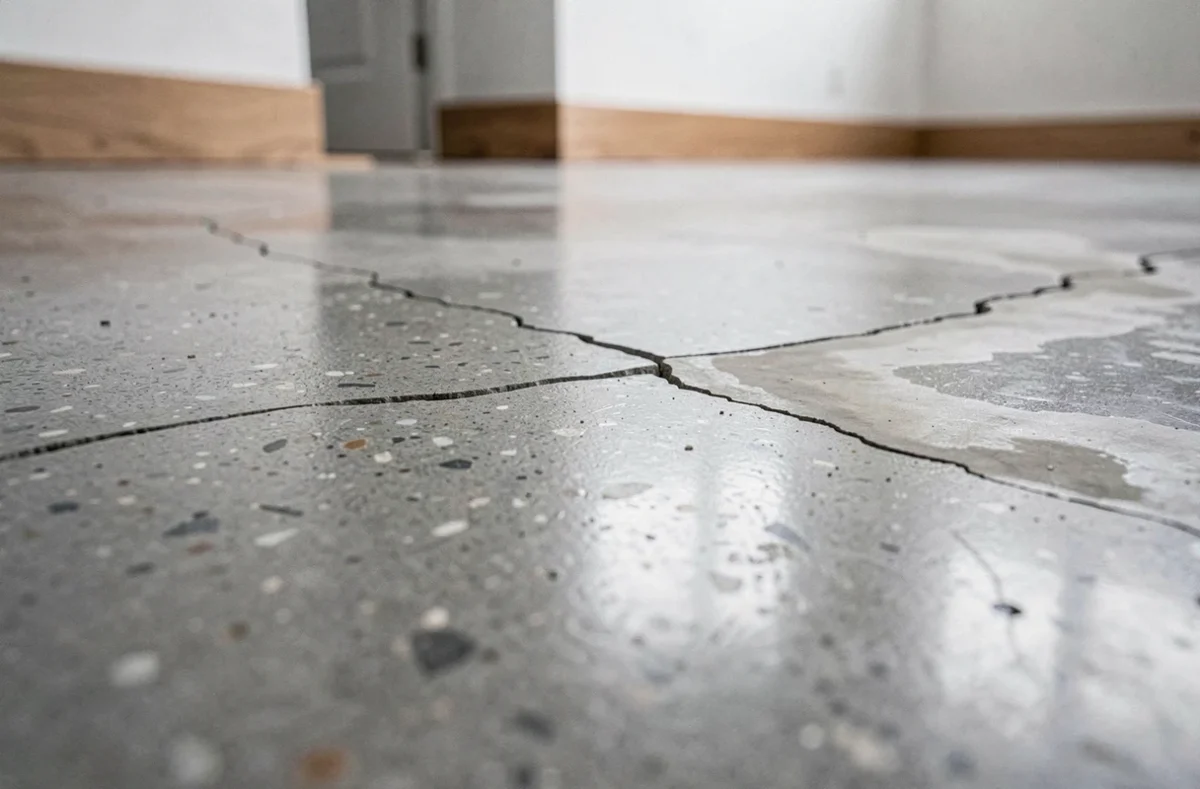
The quartz layer is often associated with overall protection of the concrete. In reality, quartz enhances abrasion resistance, not crack resistance. Too rapid drying, poorly positioned shrinkage joints, or significant thermal variations cause the same cracks as in conventional concrete.
The smooth and shiny finish of quartz concrete even visually exacerbates the problem. On raw or bush-hammered concrete, a micro-crack goes unnoticed. On a polished and uniform surface, it stands out. You end up with a technically functional floor but aesthetically degraded, which poses a real issue in a showroom or a home living room.
To limit this risk, a strict joint layout must be respected, and curing must be carefully managed right from pouring. However, these precautions fall under the expertise of the installer, not the material itself. The weak points of quartz concrete that most frequently come up in site feedback have been documented, and cracking consistently ranks at the top.
Implementation Errors: A Failed Quartz Concrete Is Difficult to Correct
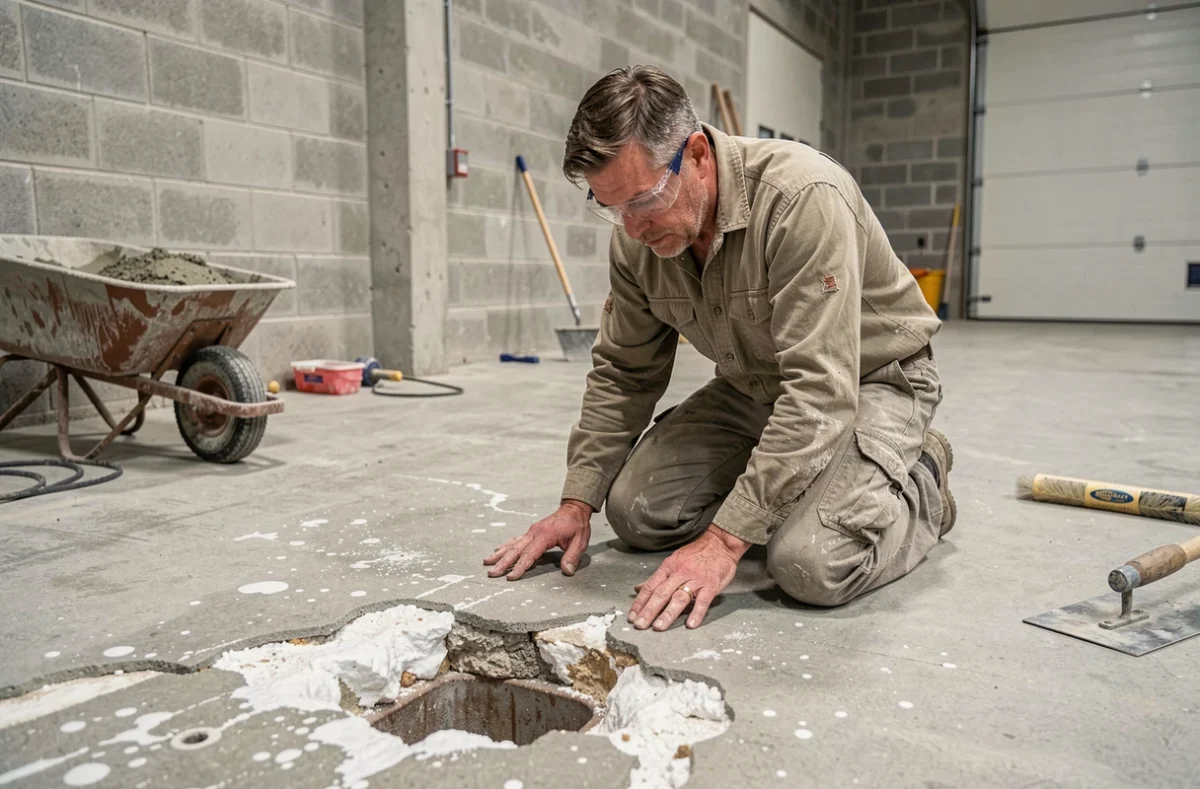
The sprinkling of quartz occurs on fresh concrete, within a limited time window. If the applicator intervenes too early (the concrete is still setting) or too late (the surface has begun to harden), the consequences can be severe: crazing, delamination of the quartz layer, or even through cracks.
A degraded quartz concrete may require complete grinding. Unlike waxed concrete or some fine decorative coatings that can accept a renovation layer on top, quartz concrete does not easily recover. This then involves mechanical leveling, with milling of the surface, which represents a significant cost and downtime for the premises.
This level of requirement at installation explains why quartz concrete remains a specialist product. Entrusting the project to a company inexperienced with this type of finish multiplies the risks of rework.
Chemical Resistance of Quartz Floors: An Often-Underestimated Point
Quartz used in quartz concrete contains crystalline silica. During pouring and especially during subsequent interventions (sanding, grinding, cutting), the fine dust released poses a recognized respiratory risk. Current regulations in the construction industry impose occupational exposure limits and specific protective measures.
This point does not directly concern the end user of the floor, but it has practical consequences. Any renovation or repair intervention requires a dust management protocol: source extraction, personal protective equipment, or even area confinement. This increases the cost of maintenance work and extends timelines.
Feedback varies on this point depending on regions and companies, but the regulatory trend is moving towards stricter constraints related to crystalline silica on construction sites.
Quartz Concrete Outdoors: Slipperiness and Seasonal Maintenance
Indoors, the smooth surface of quartz concrete is an aesthetic asset. Outdoors, it becomes a risk factor. A smoothed quartz concrete can become slippery in rain or frost, especially if no anti-slip treatment was planned during installation.
You can opt for a brushed or swept finish that improves grip, but then you lose the shiny appearance that makes the product appealing. This is a decision to be made at the project’s design stage, not a problem to be solved afterwards.
Outdoor maintenance also requires regular attention. Moss and lichens settle on the porous surface of the concrete, and freeze-thaw cycles weaken the quartz layer if surface protection is not renewed. An overly aggressive pressure cleaning can itself damage the finish.
Quartz concrete remains a high-performance coating for floors subjected to heavy mechanical stresses. Its limits do not disqualify it, but they impose a precise specification from the design stage: choice of installer, surface treatment suitable for use, chemical protection budget, and long-term maintenance plan. A well-specified and well-installed quartz floor lasts for decades. Poorly anticipated, it accumulates costly rework.