A renovation or construction site does not go off the rails the day a craftsman poorly installs a partition. It goes off the rails several weeks earlier, when no one has checked that the administrative schedule, the technical schedule, and the budget are progressing at the same pace. The management and monitoring of real estate works consist of keeping these three lines parallel, from the first shovel strike to the handover.
Administrative schedule and work monitoring: the trap that the site does not forgive
Even before discussing on-site coordination, a real estate project requires setting an administrative schedule. Are you renovating a rental property classified F in the DPE? The regulatory deadlines related to energy performance (class F affected from 2028, class E from 2034) can turn a simple improvement project into a fixed-date obligation.
For projects funded by MaPrimeRénov’, starting work before the Anah decision can compromise eligibility. Possible audit, submission of the file, waiting for the decision, and only then starting: this sequence must be included in the overall schedule, not in a separate file treated as a formality.
In co-ownership, the multi-year work plan (PPPT) has been mandatory since 2025 for co-ownerships of 50 lots or fewer. This document, which lists the works to be planned over ten years, links each specific project to a collective maintenance strategy. Monitoring an isolated project benefits from being framed within this broader context, if only to anticipate votes in the general assembly.
You will also find information on works via 123 Net Immo detailing the different types of real estate projects and their specific constraints.
Site schedule: structuring monitoring without oversized tools

A site schedule does not need professional construction software to be useful. It needs three things: clear milestones, an identified person responsible for each lot, and a respected update frequency.
Milestones and work lots
Breaking the project down into lots (structural work, finishing work, final touches) helps identify dependencies. If the electrician cannot proceed until the plasterer has finished, this constraint must be clearly documented. A simple spreadsheet with start and end dates for each lot is sufficient for a residential renovation project.
Each lot must have a unique contact person from the company. When a delay occurs, you know whom to call. When a budget arbitration is necessary, you know whom to quote.
Site report: the record that protects
The site visit report is not a formality. It is the document that, in case of a dispute, proves what was observed, decided, and accepted on a given date. Even for an individual building their house, writing a brief summary after each visit (date, attendees, points raised, decisions made) changes the game in case of disagreement.
A report signed by the parties serves as much stronger evidence than an oral exchange or a text message.
Risk management on a construction or renovation project
Why do some sites slip by several months when the initial schedule seemed realistic? Often because identifiable risks were not anticipated.
- The risk of discovery in renovation: opening a load-bearing wall and finding an undocumented network, structural moisture, or asbestos material. Allowing a margin of time and budget for these unforeseen events reduces stress when they occur.
- The risk of supply disruption: some materials (custom joinery, specific technical equipment) have long delivery times. Ordering critical items as soon as the quotes are signed prevents blocking the entire site for a door.
- The regulatory risk: non-compliance with RE2020 for new builds, failure to adhere to local urban planning rules, lack of an asbestos diagnosis before work. Each of these oversights can lead to a work stoppage.
- The waste-related risk: the REP PMCB (products and materials for construction) sector now organizes the traceability of construction waste. The project owner must ensure that companies dispose of waste at compliant collection points.

Handover of real estate works: the moment when everything is at stake
The handover is the act by which the project owner accepts (or refuses) the completed works. It triggers the legal guarantees: one-year perfect completion guarantee, two-year biennial guarantee, ten-year decennial guarantee.
Without a handover report, these guarantees do not formally commence. Many individuals move into their new or renovated home without having signed this document. In case of subsequent issues, the legal situation becomes unclear.
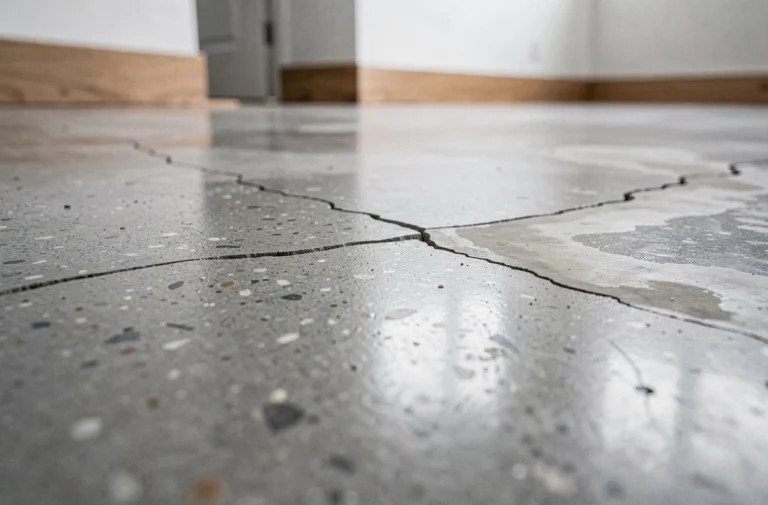
During the handover, note every reservation on the report: cracks, incomplete finishes, missing equipment. The company then has a deadline to address these reservations. If you do not note them on the day, you lose a contractual leverage.
What to check on the day of the handover
- The operation of each piece of equipment (faucets, shutters, electrical outlets, ventilation)
- The conformity of the finishes compared to the plans and the signed description
- The absence of visible defects (cracks, moisture stains, alignment issues)
The monitoring of real estate works does not stop at delivery. The resolution of reservations truly closes the project. As long as reservations remain open, the project is not finished, even if you have moved in. Keeping the complete file (signed quotes, reports, handover report) is your best protection for the years to come.