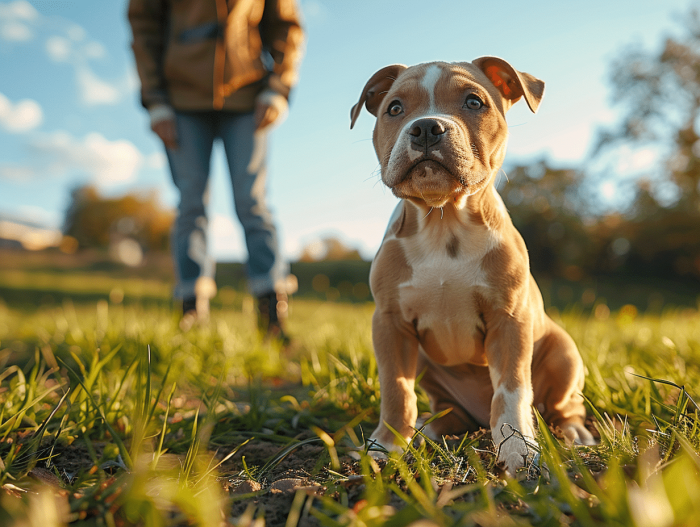
American Bullies, with their robust appearance and affectionate temperament, have gained popularity among dog enthusiasts. Their training requires a specific approach to ensure they become balanced and obedient companions. Understanding the particular needs of this breed is essential for establishing a harmonious relationship.
Training these dogs involves patience, consistency, and a good dose of positive reinforcement. Simple tips, such as early socialization and short but regular training sessions, can make all the difference. With the right recommendations, training an American Bully becomes a rewarding experience for both the owner and the animal.
Understanding the specific needs of the American Bully
The American Bully, a robust and athletic dog breed, is the result of crossing the American Staffordshire Terrier, the Pitbull Terrier, and the Bulldog. Originating from the United States, this breed is recognized by the United Kennel Club and the American Bully Kennel Club. However, it is not recognized by the FCI and the SCC.
The different size categories
The American Bully comes in several size categories:
- Classic
- Standard
- Extreme
- XL
Medical predispositions
Like any dog, the American Bully can be prone to certain diseases. Among them:
- Dysplasia
- Stomach torsion
- Skin problems
These predispositions require increased vigilance from owners and regular veterinary care.
Mistakes to avoid with American Bully
To properly train an American Bully, avoid common mistakes such as using coercive methods or neglecting early socialization. An education based on positive reinforcement and varied social interactions from a young age is crucial for balanced development.

Training and socialization techniques for a balanced American Bully
Training the American Bully is based on fundamental principles that must be respected to ensure a balanced and well-adjusted dog. The use of positive reinforcement is essential. This method, based on rewarding desired behaviors, creates a relationship of trust and respect between the dog and its owner.
Key steps in positive reinforcement
- Use treats or petting to reinforce good behaviors.
- Avoid any form of physical or verbal punishment.
- Repeat exercises regularly to consolidate learning.
Socialization: a fundamental step
The socialization of the American Bully begins at a young age. Expose it to different environments, noises, people, and other animals so it develops a calm and confident attitude. The socialization period generally extends until about 16 weeks, but regular social interactions throughout its life remain necessary.
The role of the dog trainer
Hiring a dog trainer can be helpful, especially for novice owners. This professional will provide personalized advice and techniques suited to each dog. Training sessions not only help correct inappropriate behaviors but also strengthen the bond between the dog and its owner.
Common mistakes to avoid
- Do not neglect training sessions from a young age.
- Do not use coercive methods.
- Do not leave your dog without regular socialization.
Follow these recommendations to provide your American Bully with a harmonious and balanced education, essential for its well-being and integration into your family.