
The bronze sold as scrap in France averages around 6.40 euros per kilo over the last thirty days, with a range observed between 5.20 and 7.40 euros according to scrap dealers. This average masks significant discrepancies related to the cleanliness of the lot, the actual composition of the alloy, and the collection point.
Anticipating the price per kilo of bronze in 2026 requires understanding what happens downstream, at the recycler, much more than following a theoretical course.
Cleanliness discount and sorting of lots: what really determines the buyback price
The price displayed by a scrap dealer is never the price received. As soon as a lot of bronze contains residues of brass, stainless steel, or ferrous elements, the recycler applies a cleanliness discount that can reach several tens of cents per kilo. This practice is systematic and rarely detailed in online pricing grids.
A wet, oxidized lot or one mixed with paint incurs an additional deduction, often estimated at around 5% of the value. The recycler does not pay for an alloy: he pays for a lot that he will have to sort, melt, and purify before resale.
The difference between a homogeneous and dry lot, correctly identified as bronze (copper-tin), and an approximate lot labeled “bronze” but containing mixed brass, can represent more than one euro per kilo in lost revenue. For a craftsman or workshop accumulating scraps over several months, the financial impact is direct.
Estimating the price per kilo of bronze in 2026 also involves this requirement for upstream sorting.
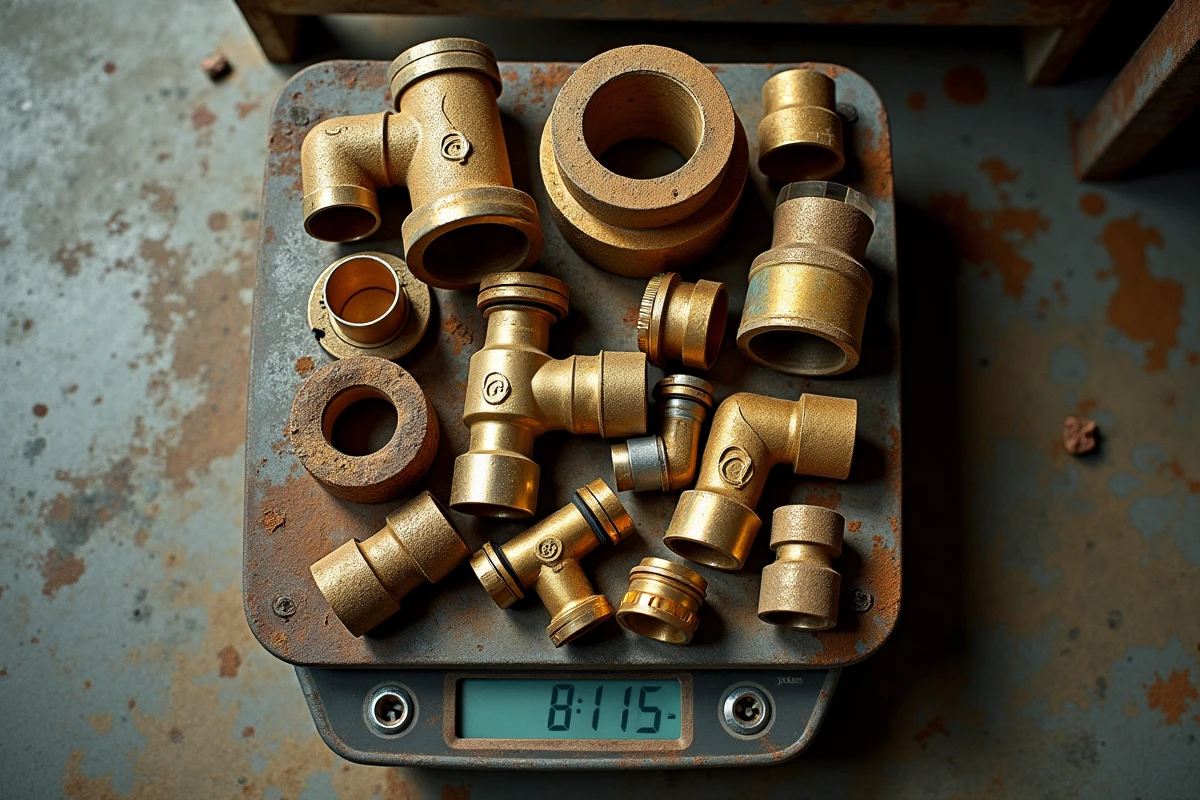
Preparing a lot to maximize the price
- Physically separate bronze from brass and other non-ferrous metals before delivering to the scrap dealer. A magnet can quickly remove unwanted ferrous pieces.
- Remove non-metallic elements (plastic, rubber, thick paint residues) that weigh down the lot without adding value and automatically trigger a discount.
- Store scraps in a dry place. Surface oxidation is normal on bronze, but a soaked or muddy lot will be systematically undervalued at weighing.
- Request a transparent weighing and a free on-site estimate. Some scrap dealers, like those offering immediate payment after inspection, make it easy to compare offers.
Copper and tin prices: the two variables driving bronze
Bronze is an alloy. Its buyback price as scrap primarily depends on the copper price, which represents the major component of the alloy, and to a lesser extent on the tin price. Recyclers index their pricing grids on these two metals, with a lag of a few days to a few weeks depending on the size of the operator.
In practice, when copper rises on international markets, the buyback price of bronze follows with a slight delay. The opposite is also true: a drop in copper quickly affects the prices offered to individuals and professionals.
Why the scrap dealer’s price does not follow the LME price in real-time
A local scrap dealer does not operate like a trader. He buys a lot, stores it, sorts it, and then resells it in bulk to a refiner or foundry. His margin covers transportation, sorting, and the risk of contamination of the lot. The gap between the spot price of copper and the price paid at the counter reflects this chain of intermediate costs.
The average figure of 6.40 euros per kilo observed in France already includes this margin. A lot sold directly to a specialized foundry, in sufficient volume and perfectly sorted, would obtain a higher price. For most sellers of scraps, the local scrap dealer remains the realistic channel, and the negotiation margin is based on the quality of sorting, not on the current price.
Regional variations in the buyback price of bronze in France
Buyback prices vary significantly from one geographical area to another. The concentration of scrap dealers, the proximity of a foundry or an export port, and the local collection volume directly influence the offered price.
A scrap dealer located near an industrial hub will generally pay better than an isolated operator in a rural area, because his logistical costs are lower and his resale volumes are more consistent. The range of 5.20 to 7.40 euros per kilo observed in the French market partly reflects these geographical disparities.
Comparing at least three scrap dealers within a reasonable radius before selling a lot remains the best approach. The pricing grids published online serve as a starting point, but the actual price is always negotiated on-site, lot in hand.

Bronze, brass, copper: avoid the confusion that costs money
A common mistake is to present brass (copper-zinc) as bronze (copper-tin). Mixed brass trades at a lower price than clean bronze. Confusing the two alloys leads to losses in both directions: the scrap dealer will classify a mixed lot in the least valued category.
The visual distinction is not always obvious. Bronze has a more reddish-brown hue, while brass tends toward yellow. In case of doubt, a file test on a discreet area reveals the inner color of the alloy. Some scrap dealers have a portable XRF analyzer that identifies the exact composition in seconds.
- Bronze (CuSn): reddish-brown hue, heavier, buyback superior to brass in most grids.
- Brass (CuZn): yellow hue, more common in plumbing and fittings, lower buyback price.
- Pure copper: the most valued of the three, recognizable by its characteristic reddish-orange color.
A lot correctly separated into these three categories will always be better paid than a lot sold in bulk under the label “non-ferrous metals.” Upstream sorting remains the most direct lever to improve the price per kilo, regardless of market fluctuations in 2026.
Recent trends show a slight decrease in average prices over the last month. For a scrap seller, the timing of the sale matters less than the quality of the lot’s preparation. A clean and well-sorted lot more than compensates for a fluctuation of a few cents on the price.