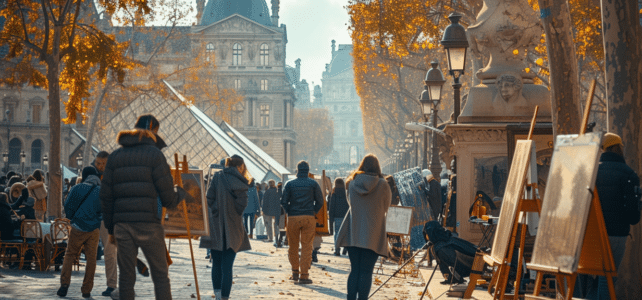
Artistic institutions play a fundamental role in Parisian cultural life. Museums, galleries, and theaters not only shape the urban landscape but also the very identity of the city. Whether discussing the Louvre, the Centre Pompidou, or the Théâtre de la Ville, these places are crossroads where influences and inspirations intersect.
Temporary exhibitions and permanent collections attract millions of visitors each year, creating a rich and diverse social fabric. Educational initiatives and artist residencies launched by these institutions also help to energize the cultural scene by providing platforms for emerging talents.
Major artistic institutions and their role in Parisian cultural life
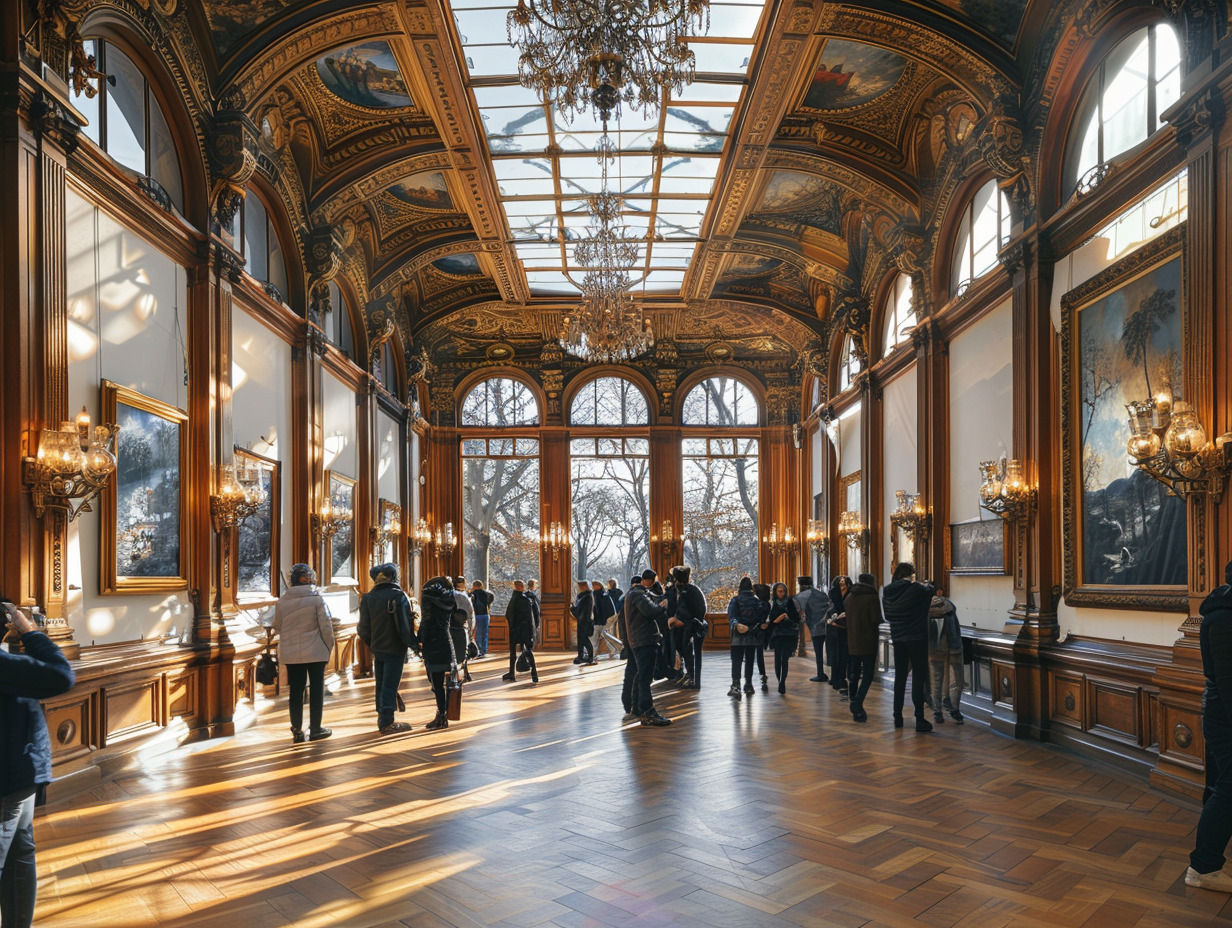
Parisian cultural life would not be what it is without its major artistic institutions. First and foremost, the Louvre represents an essential pillar. With its art collections spanning several millennia, this museum attracts millions of visitors each year. As a place of preservation and education, it plays a central role in the dissemination of global artistic heritage.
The Centre Pompidou stands out for its architectural boldness and its collection of modern and contemporary art. Since its inauguration in 1977, it has become a space for creation and reflection where artists and the public meet. The temporary exhibitions and artist residencies it offers invigorate the Parisian art scene.
Parisian theaters, such as the Théâtre de la Ville, are venues for the dissemination of contemporary dramatic creation. They allow artists to present innovative and engaged works, thus contributing to the enrichment of the cultural landscape of the capital.
The role of art galleries in cultural events is also fundamental. Beyond museums and theaters, art galleries provide exhibition platforms for both emerging and established artists, fostering diversity in artistic practices. Events like the FIAC (International Contemporary Art Fair) or Paris Photo enhance the city’s appeal as a global artistic capital.
Initiatives and artistic projects influencing the cultural scene
Paris, a nerve center of artistic creation, sees innovative initiatives emerging that continually redefine its cultural scene. The DRAC Île-de-France (Regional Directorate of Cultural Affairs) funds various cultural projects, thus offering opportunities to artists and creators. These projects include artist residencies, festivals, and participatory workshops.
The INSEE, in collaboration with the Apur (Paris Urban Planning Workshop) and the Institut Paris Région, published a study last July to analyze the consequences of the pandemic on the cultural sector. This study, co-written by Cécile Le Fillâtre and Jean-Philippe Martin, highlights the challenges faced by cultural actors and the initiatives put in place to address them. A particular emphasis is placed on projects for the digitization of works and performances to maintain the connection with the public despite health restrictions.
- Artist residencies: These residencies allow artists to develop their projects in optimal conditions, often in collaboration with local institutions.
- Festivals: Events like the Cannes Film Festival, although held outside of Paris, strongly influence trends and artistic exchanges in the capital.
- Participatory workshops: Offer the public the opportunity to immerse themselves in the creative process, thus fostering a better understanding and appreciation of contemporary art.
The diversity of projects and initiatives supported by various institutions helps maintain Paris’s status as a global artistic capital. These collective efforts aim to strengthen the resilience of the cultural sector in the face of crises and promote a culture accessible to all.
The challenges and prospects for artistic institutions in Paris
The Covid-19 pandemic has left an indelible mark on the Parisian cultural sector. Paris recorded a loss of activity of around 12% in 2020. Seine-Saint-Denis was even more affected, with an 18% drop in its cultural activity. This crisis revealed the structural vulnerabilities of artistic institutions, but also their resilience.
The Hauts-de-Seine, on the other hand, showed a quicker rebound capacity thanks to the recovery of sectors like audiovisual and advertising. Montreuil and Vincennes, hubs of employment in visual arts and architecture, have been durably impacted.
Prospects for recovery
To overcome these challenges, institutions must turn to innovative funding models and inclusive cultural policies. Diversifying funding sources, including public-private partnerships, seems to be a promising path. Strengthening the digitization of works and performances is imperative to maintain the connection with the public.
- Innovative funding models: Public-private partnerships can offer sustainable solutions.
- Digitization: The digitalization of works is essential for the survival of the sector.
Cultural actors must also rethink their communication strategies to reach a broader and more diverse audience. Collaboration with educational institutions can play a key role in widening access to culture. The DRAC, for example, could intensify its efforts to fund cultural projects in less advantaged neighborhoods.