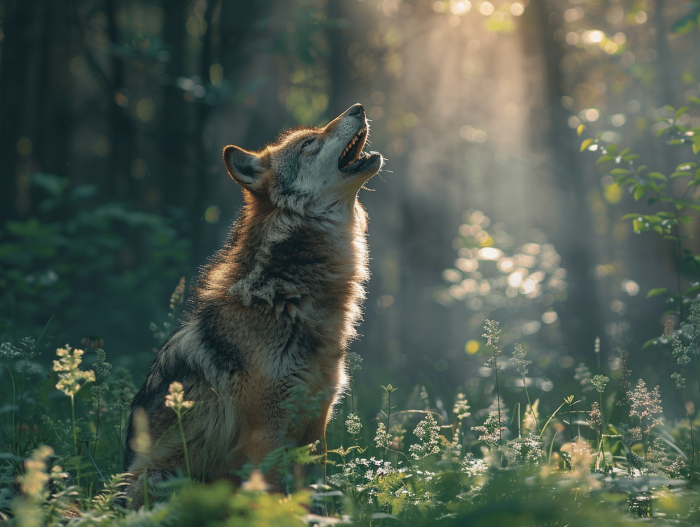
The cries of animals in nature have always fascinated humans, often attributing meanings that are not well known. Each species has a unique vocal language used to communicate various messages such as warnings, mating calls, or distress signals. These sounds are not only primary means of communication but are also rich in symbolism.
The howls of wolves, for example, are often perceived as symbols of freedom and family bonds, while the songs of birds at dawn can evoke hope and renewal. The interpretation of these cries reveals not only the behaviors of animals but also the deep connections between nature and human culture.
The Functions of Animal Cries in Nature
Animal cries serve various essential functions in the wild. Each animal cry has a specific meaning, often fundamental for survival and communication within the species.
Communication and Defense
- White-throated Sparrow: uses song to communicate over long distances and defend its territory.
- Laughing Gulls and Royal Penguins: share message redundancy, thus reinforcing group cohesion.
- Spectacled Caiman: emits distress calls, alerting its peers to imminent danger.
Hierarchies and Rituals
- Elephant Seals: use growls to establish social hierarchies.
- Spotted Hyena: attracts lions with its cries of frustration, creating complex interactions between the two species.
- Howler Monkey: sings for hours without seeing each other, reinforcing social bonds at a distance.
Early and Adaptive Language
Some species possess linguistic abilities from birth. Crocodiles use language even before hatching, communicating with their siblings still in the egg. The cry of the fox, on the other hand, can vary depending on the situation, ranging from a distress signal to a territorial call.
The sound world of animals is thus a mosaic of signals and messages, each cry revealing unique and fascinating aspects of wildlife.
The Cultural Symbolism of Animal Cries
Animal cries are not limited to simple biological communication. Their interpretation also carries a cultural and symbolic dimension. Nicolas Mathevon, a specialist in animal vocalizations and author of the book Animals Speak, Let’s Learn to Listen, emphasizes the importance of understanding these sounds in their natural and cultural context.
Animals in Myths and Beliefs
Animal cries are often integrated into myths and popular beliefs. For example:
- The cry of the wolf is frequently associated with the moon and supernatural forces.
- The cry of the raven is perceived as a harbinger of death in many cultures.
- The songs of birds are often interpreted as divine messages or omens of change.
Scientific Analysis and Cultural Perception
Nicolas Mathevon, a guest on the show The Time of a Bivouac hosted by Daniel Fiévet, explores how the perception of animal cries varies across cultures and eras. He notes that the scientific understanding of animal vocalizations can enrich our cultural appreciation of these sounds.
| Personality | Role |
|---|---|
| Nicolas Mathevon | Studies animal vocalizations, author, guest on the show |
| Daniel Fiévet | Host of the show The Time of a Bivouac |
Symbolism and Modernity
With the rise of communication technologies, the interpretation of animal cries takes on new dimensions. Mathevon’s studies highlight how recordings and acoustic analyses can transform our understanding of the signs and symbols inherent in animal cries, while respecting their rich cultural heritage.